The National Bureau of Statistics (NBS) says Nigerians faced higher transportation costs in February 2026, driven by increases in airfares and motorcycle (Okada) charges.
According to its latest Transport Fare Watch report, the average airfare for specified routes rose to ₦153,647.95 in February, representing a 1.51 per cent increase from January and a 21.38 per cent year-on-year jump.
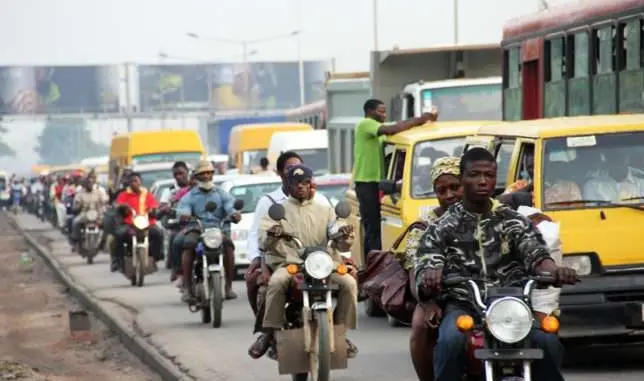
Okada fares also recorded a sharp rise, with the average cost climbing to ₦920.95, up 4.82 per cent month-on-month and 53.26 per cent compared to February 2025, making it one of the fastest-growing transport segments.
Within cities, bus fares increased marginally by 0.74 per cent to ₦1,195.75, up from ₦1,186.98 in January. In contrast, intercity bus fares declined by 4.65 per cent to ₦8,108.81, offering slight relief to long-distance travellers.
Water transport fares edged up to ₦2,097.30, reflecting a 0.55 per cent monthly increase and a 31.66 per cent rise year-on-year, highlighting persistent cost pressures across multiple transport modes.
A breakdown by state showed that Abia and Ogun recorded the highest intercity bus fares, while Kwara and Edo posted the lowest. Lagos led in intra-city bus fares, Kano recorded the highest airfares, and Kaduna topped Okada charges. Rivers and Bayelsa had the highest water transport costs.
Regionally, the South West recorded the highest average fares for intra-city bus and motorcycle transport, while the South South led in air and water transport costs. The North East consistently posted the lowest fares across several categories.
The rising transport costs come amid fluctuations in global oil prices and domestic fuel pricing.

Brent crude fell by over 3 per cent to about $100.64 per barrel, while US West Texas Intermediate (WTI) dropped to $98.04, as uncertainty surrounding Middle East tensions unsettled markets despite indications of a possible de-escalation.
In Nigeria, the Dangote Petroleum Refinery recently reduced its ex-depot petrol price to ₦1,200 per litre, with a coastal price of ₦1,153 per litre, a move expected to influence fuel supply costs across the downstream sector.
Despite the adjustment, elevated petrol prices have continued to drive up transportation fares nationwide, with ripple effects on the cost of goods and services.