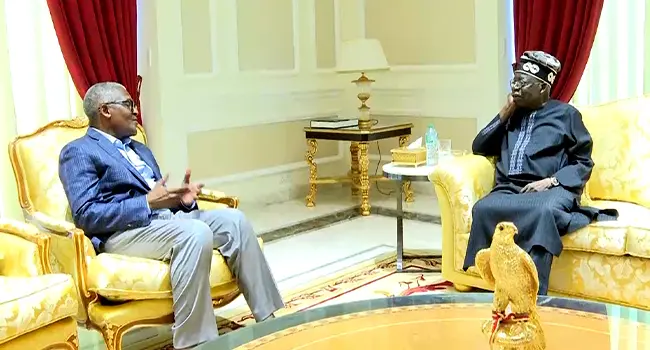
Aliko Dangote, president of the Dangote Group, has warned that rising volatility in the global oil market, driven by escalating tensions in the Middle East, could deepen economic hardship across Africa if the crisis is not urgently resolved.
Speaking after a visit to Bola Tinubu in Lagos on Monday, Dangote noted that while Nigeria is not directly involved in the conflict, it will inevitably feel the effects of global oil price swings.
“It means quite a lot. We don’t have much to do with it, but the world is a global village. It will affect us, unfortunately, and we hope the situation is resolved soon,” he said.
Dangote cautioned that a prolonged crisis could further strain already fragile economies, particularly in Africa, where fiscal buffers are thin and debt burdens remain high.
“If it doesn’t de-escalate, we’ll pay a heavy price. Africa is already grappling with debt, and adding this will increase hardship for governments and citizens alike, for something we are not involved in,” he said.
He emphasized that energy costs underpin nearly every sector of the economy, warning that sustained increases would have widespread ripple effects on livelihoods and production.
“If this continues, prices will keep rising, and governments cannot simply increase salaries. People will feel the strain—small businesses, artisans, manufacturers, everyone relying on fuel for daily operations,” he added.
Dangote also pointed to potential global adjustments as countries attempt to manage energy consumption, including reduced workweeks and expanded remote working arrangements, similar to measures seen during the COVID-19 pandemic.
“If the situation worsens, we could see more countries cutting workdays or shifting back to working from home. But in many cases, if people don’t work, they don’t earn. That’s why it’s critical this crisis is resolved quickly,” he said.
Economic outlook and UK deal
On Nigeria’s economic prospects, Dangote described President Tinubu’s recent state visit to the United Kingdom as a significant step forward, particularly in strengthening economic diplomacy.
“Diplomacy today must include economic outcomes. I believe the visit will open many doors,” he said.
He highlighted a major agreement worth about £746 million aimed at improving infrastructure, especially in ports, as a notable achievement.
“That’s a substantial commitment. Securing such funding is not easy, especially given current global economic pressures. It shows confidence in Nigeria,” Dangote said.

He added that the deal could encourage further investment from other countries.
“Once this kind of confidence is demonstrated, others like Germany and beyond will begin to follow,” he noted, urging Nigerian investors to take advantage of emerging opportunities, particularly access to international financing.
Rising oil prices and local impact
Global oil prices have come under sustained pressure in recent weeks amid fears of supply disruptions linked to Middle East tensions, driving up the cost of petroleum products worldwide.
In Nigeria, the impact is already visible in rising fuel prices, as refiners and marketers adjust to higher crude costs. The Dangote Refinery and other downstream operators have increased prices in response to global market conditions.
This has compounded existing economic pressures, with consumers facing higher transportation and living costs.
Businesses, many of which rely on petrol and diesel-powered generators due to persistent electricity challenges, are also feeling the strain. Rising energy costs have pushed up production expenses, which are increasingly being passed on to consumers, further fueling inflation.