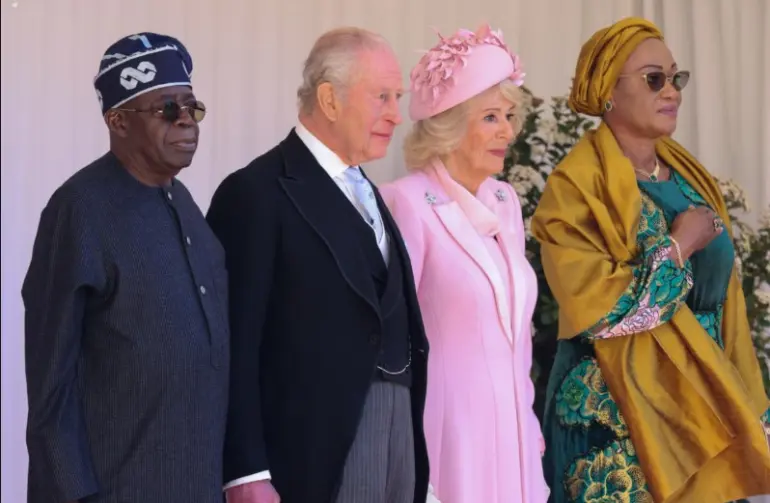
The Socio-Economic Rights and Accountability Project (SERAP) has urged King Charles III to use President Bola Tinubu’s state visit to the United Kingdom as an opportunity to raise concerns about “serious and ongoing human rights violations and the shrinking civic space in Nigeria.”
President Tinubu’s visit, which focuses on strengthening diplomatic, economic, and security cooperation between Nigeria and the UK and deepening ties within the Commonwealth, presents “a timely opportunity to place human rights, accountability, and the rule of law at the centre of bilateral and Commonwealth engagement,” SERAP said.
In an open letter dated 18 March 2026 and signed by SERAP Deputy Director Kolawole Oluwadare, the organisation called on the King to press for respect for the rule of law and protection of human rights in Nigeria.
SERAP expressed concern over the growing use of repressive laws and strategic lawsuits to harass and silence journalists, activists, and critics, citing the misuse of the Cybercrimes Act and criminal defamation laws.
The organisation also highlighted the plight of internally displaced persons in parts of northern Nigeria including Benue, Borno, and Plateau states, many of whom are reportedly denied basic rights such as freedom of movement, access to healthcare, and legal protections.
“Thousands of displaced Nigerians continue to face serious human rights challenges and are often excluded from decisions affecting their lives and future,” the letter stated.
SERAP reminded that, as a member of the Commonwealth, Nigeria has committed to uphold the values of the Commonwealth Charter, including respect for human rights, democracy, and the rule of law. “Respect for these values must be reflected in practice, not just in commitments.”
The organisation urged King Charles III to leverage his moral authority to encourage human rights reforms, noting that “the credibility of the Commonwealth depends on the willingness of its members to uphold shared values.”
Highlighting high-profile cases, SERAP noted the prosecution of activist and journalist Omoyele Sowore, the 2024 detention of investigative journalist Daniel Ojukwu, and the arrest and prosecution of lawyer Dele Farotimi. “No one should be arrested, detained, or prosecuted for peacefully exercising their human rights,” SERAP said, adding that attacks on journalists contribute to a climate of fear and undermine democratic accountability.

The UN Special Rapporteur on freedom of expression has also warned that criminal sanctions for peaceful expression are incompatible with international law, creating a chilling effect on public debate.
SERAP called on King Charles III to press President Tinubu and Nigerian authorities to restore the rights of displaced people, including liberty, security, safety, and freedom of movement, ensuring that all stays in camps are voluntary. The organisation urged a public commitment to treating all Nigerians with dignity and respect, allowing full enjoyment of human rights, and ensuring independent access to and monitoring of camps housing displaced persons.
SERAP also emphasised the need for a consultative process allowing displaced persons to make informed decisions about return and resettlement, ending arbitrary detention, and ensuring all screening practices comply with legal safeguards and international standards.
The organisation urged Nigerian authorities to drop charges and release all individuals detained solely for peacefully exercising freedom of expression, reform laws, and create an enabling environment for activists and journalists. SERAP further called for an immediate stop to the intimidation and harassment of journalists, activists, bloggers, and civil society organizations, and for the withdrawal of SLAPP lawsuits filed against journalists, activists, bloggers, and civil society organizations, including SERAP.