
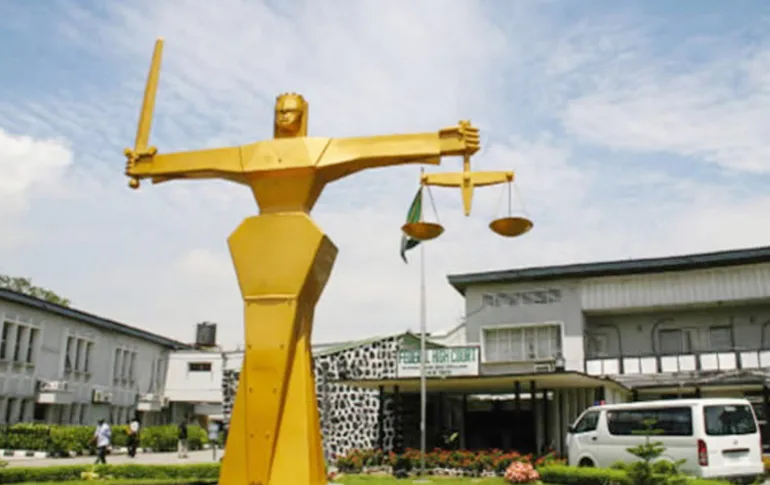
A Federal High Court in Warri, Delta State, has affirmed that Nigerians have the constitutional right to record police officers performing stop-and-search operations in public.
Justice Hyeladzira Nganjiwa delivered the judgment on Tuesday in an enforcement of fundamental rights suit (FHC/WR/CS/87/2025) filed by lawyer Maxwell Nosakhare Uwaifo. The judge also ruled that police officers must wear visible name tags, display force numbers, and must not harass, intimidate, arrest, or confiscate devices from citizens recording their actions.
Uwaifo filed the suit following an encounter with officers at Sapele Roundabout on May 10, 2025, while travelling from Benin to Warri. He sought a judicial declaration on the constitutionality of police conducting stop-and-search operations without proper identification, as well as the public’s right to record such activities.
The defendants included the Inspector-General of Police, the Nigeria Police Force, the Police Service Commission, and the Attorney-General of the Federation.
In his claim, Uwaifo argued that under Section 39 of the 1999 Constitution, Nigerians are entitled to freely express themselves, including recording law enforcement agents performing public duties. He further contended that officers seizing devices, threatening, or arresting citizens for recording is unlawful.
The plaintiff also requested injunctions to ensure all officers wear uniforms with visible names and force numbers, directives mandating the Police Service Commission to discipline offenders, and N80 million in general and exemplary damages for repeated violations of citizens’ rights.
The police did not appear in court. The AGF was represented by Babatunde Ajajogun and D.O. Tarfa. Justice Nganjiwa ultimately ruled in favor of Uwaifo, awarding N5 million in damages for violation of fundamental rights and N2 million for litigation costs.

Speaking to journalists after the ruling, Uwaifo described his encounter with the officers, noting that they were aggressive and unidentifiable, driving an unmarked black Toyota Sienna. When he attempted to record their actions, one officer threatened him, demanding that he stop filming. “The officers did not wear name tags, nor did they disclose their identities. Their behaviour was intimidating, and I feared unlawful detention,” he said.
Stop-and-search operations in Nigeria have long been controversial, with citizens alleging harassment, extortion, and intimidation at checkpoints. Civil rights groups have repeatedly called for improved police accountability, including clear identification and respect for the public’s right to record interactions.
