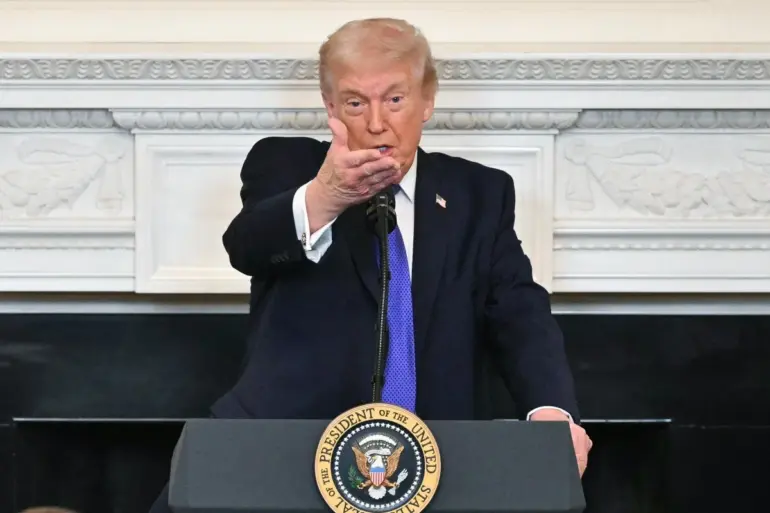
President Donald Trump announced a global duty hike to 15% on imports into the United States on Saturday, intensifying his aggressive tariff policy just a day after the Supreme Court ruled much of it illegal.
In a post on Truth Social, Trump criticized the Court’s “extraordinarily anti-American decision” and declared that, after reviewing the ruling, his administration would raise tariffs to the “fully allowed and legally tested” 15% level.
This decision came shortly after the Court’s 6-3 ruling, which rejected Trump’s use of a 1977 economic emergency powers act to impose tariffs. In response, Trump initially proposed a 10% levy, citing an alternative legal framework.
The ruling marked a significant setback for Trump, who had previously enjoyed favorable rulings from the Court since his return to office. It dealt a blow to his signature economic policy that has disrupted global trade dynamics.
The tariff increase is likely to fuel further uncertainty as Trump continues to wield tariffs as a tool in his trade war, using them to pressure both allies and adversaries alike.
Several nations have already responded to the ruling. Brazilian President Luiz Inacio Lula da Silva, speaking in New Delhi, called for fair treatment of all nations and warned against the risk of a new Cold War. “We don’t want interference in any other country,” Lula stated, urging Trump to consider equal treatment for all nations.
In Germany, Chancellor Friedrich Merz announced plans to consult with European allies on a unified stance toward the US. “We need to establish a clear European position before my visit to Washington next month,” Merz said.
Domestically, Pennsylvania Governor Josh Shapiro, a Democrat, called for an end to Trump’s “chaotic” tariff policies. “It’s time for Trump to listen to the Supreme Court and stop wreaking havoc on our farmers, small business owners, and families,” Shapiro wrote on social media.
While the 15% duty is temporary, set for a 150-day duration, there are exemptions for specific sectors, such as pharmaceuticals and products covered under the US-Mexico-Canada agreement. The White House has indicated that countries with existing tariff deals with the Trump administration will also face the new global tariff.
Despite the Supreme Court’s defeat, which dealt a blow to his broad tariff powers, Trump’s sector-specific tariffs on steel, aluminum, and other goods remain unaffected. Additional tariffs may still emerge as government probes continue.
The ruling represents Trump’s biggest loss at the Supreme Court since he returned to office, with the Court having generally extended his powers in past decisions. Trump praised the conservative justices who sided with him—Clarence Thomas, Samuel Alito, and Brett Kavanaugh while accusing the majority of being influenced by foreign interests.
Stock markets reacted mildly to the news, with Wall Street showing modest gains on Friday. Business groups welcomed the Court’s decision, with the National Retail Federation calling it a step toward providing much-needed certainty for companies.
While Trump suggested that companies may face years of litigation over the potential refunds for unlawful tariffs, the Supreme Court did not address the issue in its ruling, leaving many questions unanswered about the future of tariff refunds.