
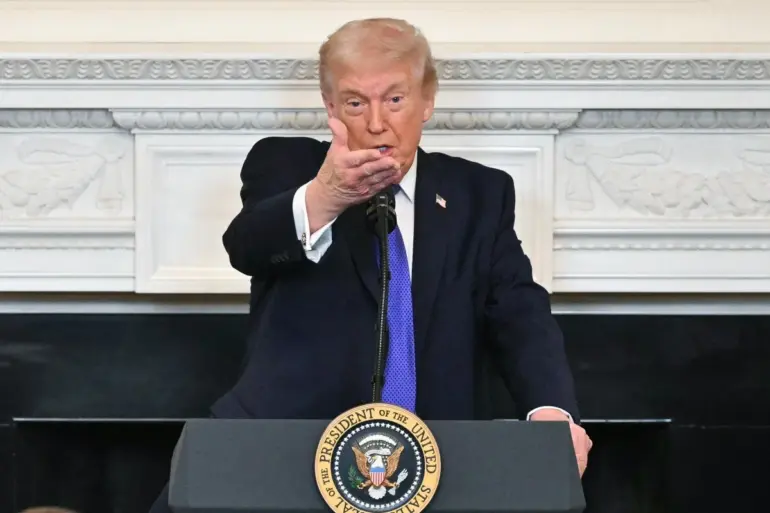
The Supreme Court of the United States ruled on Friday that Donald Trump exceeded his authority by imposing sweeping tariffs under emergency powers, blocking a central pillar of his economic agenda.
In a 6–3 decision, the conservative-majority court held that the International Emergency Economic Powers Act (IEEPA) does not authorise the president to impose tariffs. The justices said that if Congress had intended to grant such “distinct and extraordinary power,” it would have done so explicitly, as it has in other trade statutes.
Trump, who has long relied on tariffs as leverage in trade negotiations, invoked emergency economic powers after returning to office last year to introduce duties on nearly all US trading partners. These included so-called “reciprocal” tariffs targeting countries Washington deemed to have unfair trade practices, as well as separate levies on imports from Mexico, Canada and China over concerns related to illicit drug flows and immigration.
The ruling leaves untouched sector-specific tariffs previously imposed on imports such as steel and aluminium under separate statutory authorities. Several ongoing government investigations could also pave the way for additional targeted duties.
Friday’s judgment upheld earlier decisions by a lower trade court, which in May found that Trump had overstepped his authority by imposing across-the-board tariffs under IEEPA and blocked most of them from taking effect. That ruling had been temporarily paused pending appeal.
Chief Justice John Roberts, writing for the majority, noted that “IEEPA contains no reference to tariffs or duties.” Justices Brett Kavanaugh, Clarence Thomas and Samuel Alito dissented, while the court’s three liberal justices joined three conservatives in the majority.
Constrained ambitions
The decision is expected to reduce the average US tariff rate from 16.8 per cent to about 9.5 per cent, according to Gregory Daco, chief economist at EY-Parthenon, who estimated potential government revenue losses of between $100 billion and $120 billion.
However, analysts say the reprieve could be temporary if the administration turns to other statutory tools to reimpose broad-based duties. Erica York of the Tax Foundation noted that while the ruling curbs the president’s ability to impose sweeping tariffs unilaterally, other, more limited trade authorities remain available, though they often require formal investigations and procedural steps.
The justices did not address whether importers would be entitled to refunds for tariffs already paid, but Kavanaugh cautioned during oral arguments that any such process could prove complicated.
AFP
