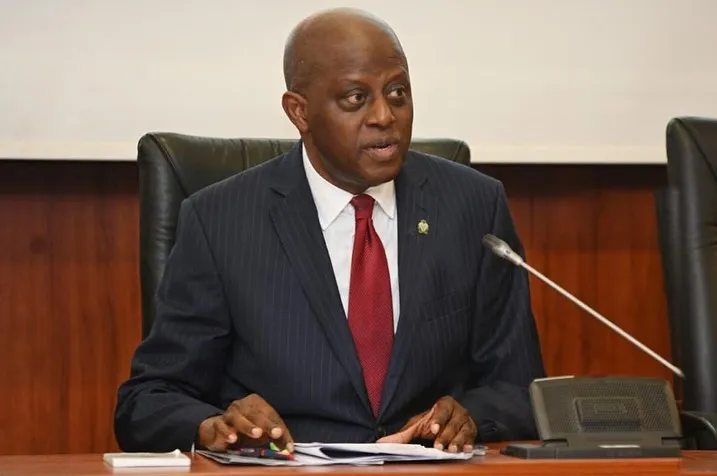
The Central Bank of Nigeria (CBN) has approved the participation of licensed Bureau De Change (BDC) operators in the Nigerian Foreign Exchange Market (NFEM), allowing each BDC to purchase up to $150,000 weekly.
The directive was contained in a circular dated February 10, 2026, and signed by the Director of the Trade and Exchange Department, Dr Musa Nakorji. It was addressed to authorised dealer banks and the general public.
The move is aimed at boosting foreign exchange liquidity in the retail segment of the market and meeting the legitimate needs of end users. It is also expected to help narrow the widening gap between the official and parallel market exchange rates, which recently exceeded N90 for the first time in three years.
According to the circular, all duly licensed BDCs are permitted to access foreign exchange through any authorised dealer bank of their choice at the prevailing market rate.
“To ensure the availability of adequate foreign exchange liquidity in the retail segment of the foreign exchange market to meet the legitimate needs of end users, all BDCs licensed by the CBN are allowed to access foreign exchange from the NFEM through any Authorised Dealer of their choice,” the bank stated.
The CBN directed authorised dealer banks to conduct full Know-Your-Customer (KYC) and due diligence checks on BDCs before selling foreign exchange to them, in line with applicable regulations and internal risk management frameworks.
Upon meeting these requirements, authorised dealers may sell foreign exchange to BDCs strictly in accordance with existing operational guidelines, subject to a maximum weekly limit of $150,000 per BDC.
To enhance transparency and monitoring, the apex bank mandated all licensed BDCs to submit timely and accurate electronic returns in line with extant regulations.
The CBN also introduced safeguards to curb speculation and hoarding. It warned that BDCs must not retain unutilised foreign exchange purchased from the market, directing that any unused balances be resold within 24 hours.

“BDCs are not permitted to keep funds purchased from NFEM in their positions,” the circular emphasised.
In addition, the bank tightened settlement procedures, requiring that all foreign exchange transactions by BDCs be conducted exclusively through settlement accounts held with licensed financial institutions.
Third-party transactions are prohibited, while cash settlement is limited to a maximum of 25 per cent of each transaction value.
The CBN stressed that existing BDC guidelines remain in force, signalling a policy approach that combines expanded market access with strict regulatory oversight as it seeks to stabilise and deepen the foreign exchange market.