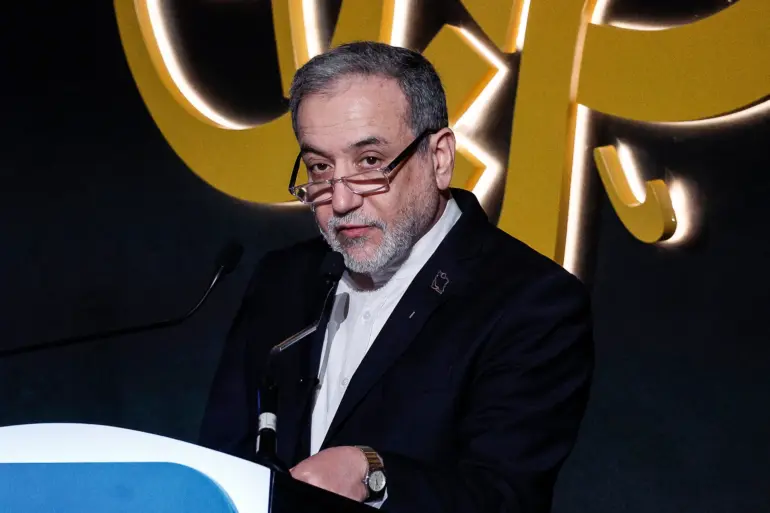
Iran will never give up its right to enrich uranium, even if war “is imposed on us,” Foreign Minister Abbas Araghchi said Sunday, defying mounting pressure from Washington.
“Iran has paid a very heavy price for its peaceful nuclear programme and for uranium enrichment,” Araghchi told a forum in Tehran. “Why do we insist so much on enrichment and refuse to give it up even if a war is imposed on us? Because no one has the right to dictate our behaviour.” The remarks came two days after his meeting with US envoy Steve Witkoff in Oman.
Araghchi said he hoped talks with the United States would resume soon, while reiterating Tehran’s red lines and warning against any American attack. Excerpts from an interview with Al Jazeera, published on his official Telegram channel, also confirmed that Iran’s missile programme remains “never negotiable.”
Israeli Prime Minister Benjamin Netanyahu is expected to raise the ballistic missile issue during a meeting with US President Donald Trump in Washington next week. Meanwhile, Araghchi warned that Iran would target US bases in the region if American forces attack Iranian territory.
The statements came as US envoys Steve Witkoff and Jared Kushner visited the USS Abraham Lincoln aircraft carrier in the Arabian Sea, signalling the continued threat of military action. The US Central Command (CENTCOM) confirmed the visit on social media, while Witkoff said the carrier and its strike group were “keeping us safe and upholding President Trump’s message of peace through strength.”
Despite the tensions, Araghchi described the recent indirect talks in Muscat as “a good start,” noting that he had the chance to shake hands with the American delegation. “There is a long way to go to build trust,” he said, adding that negotiations would resume “soon.” Trump also described the talks as “very good” and pledged another round next week, even as he signed an executive order imposing tariffs on countries still doing business with Iran and announced new sanctions on shipping entities aimed at curbing Iranian oil exports.
More than a quarter of Iran’s trade is with China, totaling $18 billion in imports and $14.5 billion in exports in 2024, according to World Trade Organization data.
Araghchi emphasised that nuclear enrichment is Iran’s “inalienable right” and must continue. “We are ready to reach a reassuring agreement on enrichment. The Iranian nuclear case will only be resolved through negotiations.” He stressed that the missile programme is “never negotiable” because it concerns a “defence issue.”
Washington has pressed Iran to address its ballistic missile programme and support for regional militant groups, demands Israel has insisted be part of the talks. Tehran has repeatedly rejected expanding negotiations beyond the nuclear issue. Netanyahu’s office said he plans to meet Trump on Wednesday to discuss the talks, stressing that any agreement should include limits on missiles and curbs on Iran’s regional allies.

Araghchi criticised what he called a “doctrine of domination” that allows Israel to expand its military arsenal while pressuring other regional states to disarm. He warned that if Iran is attacked again, it will strike US bases in the region.
The recent talks are the first since nuclear negotiations collapsed last year following Israel’s bombing campaign against Iranian targets, which triggered a 12-day conflict.
The negotiations also come amid heightened US military presence in the region and Iran’s crackdown on nationwide protests that began in late December over economic grievances. Iranian authorities have acknowledged 3,117 deaths during the protests, publishing a list of 2,986 names, mostly security personnel and bystanders. Human rights groups, however, put the toll far higher. The US-based Human Rights Activists News Agency (HRANA) reports 6,961 verified deaths, mostly protesters, with another 11,630 under investigation, alongside more than 51,000 arrests.