
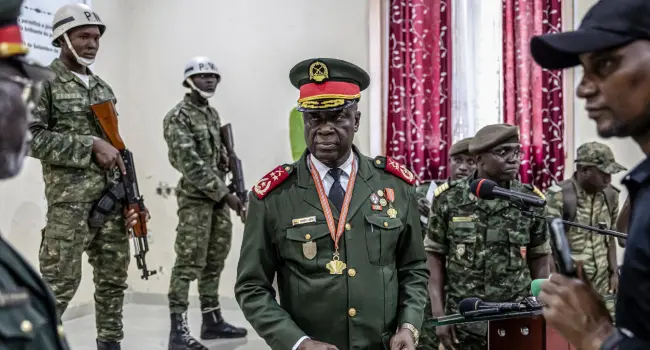
The military junta in Guinea-Bissau is no longer seeking to arrest senior opposition figure Fernando Dias, an official said on Saturday, but another prominent opposition leader, Domingos Simoes Pereira, has now been placed under house arrest.
The junta seized power on November 26, overthrowing President Umaro Sissoco Embalo just days after the presidential election and before official results were released. Embalo fled the country, and several senior politicians were imprisoned.
Dias, Embalo’s main election rival who claimed victory, avoided arrest by taking refuge at the Nigerian embassy. On Saturday, his communications manager, Gabriel Ye, said the military had lifted most restrictions on him.
“Dias is not under house arrest. The only restrictions imposed are that he must refrain from making public statements or engaging in political activities,” Ye said. He added that Embalo’s former prime minister, Geraldo Martins, had also been released.
Meanwhile, veteran politician Pereira, a former opponent of Embalo and leader of the PAIGC party, was released from jail on Friday after months of detention but was immediately placed under house arrest.
“All those detained in connection with the coup have been released,” army commander Jorgito Biague told AFP on Saturday. “Domingos Simoes Pereira is the only one under house arrest, for economic crimes. His case is in the hands of the judiciary, not the military high command.”
Pereira, who was disqualified from the presidential election for submitting his application late and later backed Dias, was escorted to his residence on the outskirts of the capital on Friday evening, where he was welcomed by supporters.

Guinea-Bissau has experienced five coups and multiple attempted military takeovers since gaining independence from Portugal in 1974.
On Saturday, the Economic Community of West African States (ECOWAS) welcomed measures taken by the transitional authorities to foster an inclusive political environment and advance the country’s return to constitutional order. The regional bloc called for Pereira’s full release and guarantees of fundamental rights for all citizens, urging all stakeholders to work toward a peaceful transition and democratic elections.
