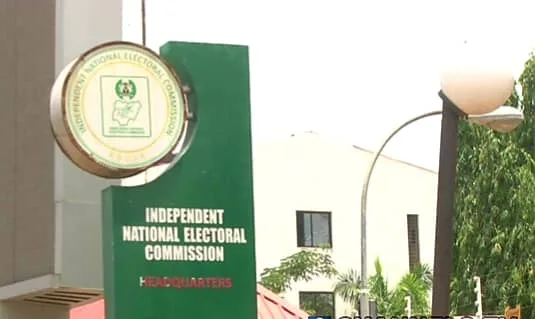
The Socio-Economic Rights and Accountability Project (SERAP) has filed a lawsuit against the Independent National Electoral Commission (INEC) over its alleged failure to account for ₦55.9 billion reportedly “missing or diverted” from funds earmarked for election materials for the 2019 general elections.
The allegations are contained in the latest annual report of the Auditor-General of the Federation, published on September 9, 2025, and highlighted by SERAP in a statement posted on its official X handle on Sunday.
In the suit, marked FHC/ABJ/CS/38/2026 and filed last Friday at the Federal High Court in Abuja, SERAP is seeking an order of mandamus compelling INEC to account for the funds allegedly allocated for the procurement of smart card readers, ballot papers, result sheets, and other election materials.
The lawsuit, filed on SERAP’s behalf by its lawyers Kolawole Oluwadare, Kehinde Oyewumi, and Andrew Nwankwo, described the findings in the Auditor-General’s report as a “grave violation of public trust, the 1999 Constitution (as amended), and international anti-corruption standards.”
According to SERAP, transparency and accountability are essential if INEC is to guarantee credible and democratic elections.
The organisation is also asking the court to compel INEC to disclose the names of all contractors paid from the ₦55.9 billion, as well as the identities of their directors and shareholders.
“INEC must operate without corruption if it is to ensure free and fair elections and uphold Nigerians’ right to political participation,” SERAP said.
No date has yet been fixed for the hearing of the suit.
SERAP warned that unresolved allegations of financial misconduct could undermine future elections, insisting that those responsible including contractors allegedly involved must be investigated, prosecuted, and any proceeds of corruption fully recovered.
“INEC cannot effectively discharge its constitutional and statutory duties if it continues to disregard the basic principles of transparency, accountability, and the rule of law,” the organisation said.
SERAP further argued that corruption in the procurement of election materials directly threatens Nigerians’ right to elections that are “free, fair, transparent, and credible.”
The group cited specific findings from the Auditor-General’s report, which alleged that INEC irregularly paid more than ₦5.3 billion to a contractor for the supply of smart card readers for the 2019 elections without approvals from the Bureau of Public Procurement (BPP) or the Federal Executive Council, and without evidence that the items were supplied.

Although INEC reportedly claimed the procurement fell under national security exemptions, the Auditor-General rejected the explanation as “alien to the Procurement Act,” insisting that a Certificate of No Objection from the BPP was required and warning that the funds “may have been diverted.”
The audit report also alleged that INEC paid over ₦4.5 billion to six contractors for ballot papers and result sheets without documentary evidence of supply, approval, or proof of contractors’ eligibility, including tax and pension clearance certificates.
Additional findings include questionable payments of more than ₦331 million under “doubtful circumstances,” failure to deduct and remit over ₦2.1 billion in stamp duties, non-retirement of more than ₦630 million in staff cash advances, and the award of contracts exceeding ₦41 billion for election materials without due process or proof of contractors’ competence.
The Auditor-General also queried the irregular award of a ₦297 million contract for the supply of four Toyota Land Cruiser vehicles, noting that market surveys indicated the vehicles did not exceed ₦50 million each at the time, despite INEC’s claim that it paid ₦74 million per unit.
In several instances, the Auditor-General expressed concern that the funds involved “may have been diverted” and recommended that the money be recovered and remitted to the treasury.