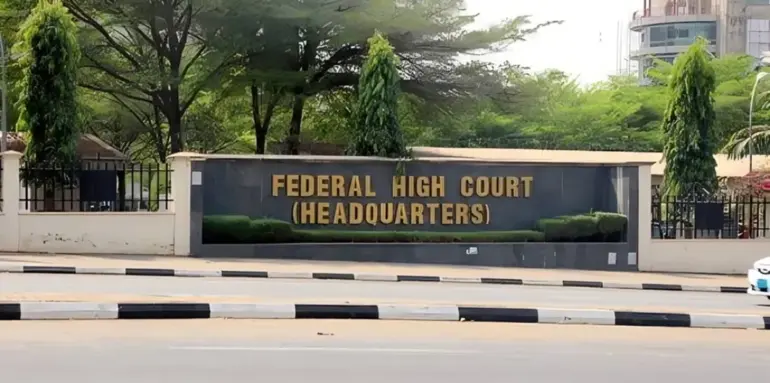
The Federal High Court in Abuja on Monday granted the Economic and Financial Crimes Commission (EFCC) an interim forfeiture order for N30.7 million allegedly linked to fraudulent activities involving officials of the Nigerian National Petroleum Company Limited (NNPC).
Justice Emeka Nwite, ruling on an ex parte application by the EFCC, held that the commission had provided sufficient evidence to justify the temporary forfeiture of the funds to the Federal Government.
The judge directed that a forfeiture notice be published in a national newspaper, giving interested parties 14 days to “show cause why the funds should not be permanently forfeited.” The case was adjourned to January 22 for the EFCC to file a compliance report on the publication.
In a supporting affidavit, the EFCC said the funds are currently lodged in its Recovery Account at United Bank for Africa, under the manager’s cheque name: M/C Draft Outstanding Account, pending forfeiture.
The anti-graft agency explained that the money was discovered during investigations into alleged fraudulent activities involving high-profile NNPC officials and other criminal complaints.
The EFCC said a Bureau De Change operator, Mr. Adamu Yakubu, emerged during the probe. Yakubu was invited to make a statement on September 2, 2025, and submitted a ledger showing records of customer transactions and dollar sales.
Analysis of the ledger revealed that over N4 billion was transferred to various individuals and companies on the instructions of Mr. Ibrahim Sani, a staff member of the Federal Inland Revenue Service. The EFCC stated that the N30.7 million sought for forfeiture remained in Yakubu’s possession from these funds.

Sani was invited for questioning on September 15, 2025. He reportedly admitted using Yakubu to transfer large sums of money to multiple accounts but claimed he neither verified nor ascertained the source of the funds. Both Yakubu and Sani denied ownership of the N30.7 million.
The EFCC maintains that the money constitutes “proceeds of unlawful activities” and relied on the Advance Fee Fraud and Other Fraud Related Offences Act, 2006, to seek the interim forfeiture order.
Under Nigeria’s asset recovery framework, interim forfeiture orders allow law enforcement agencies to preserve suspected proceeds of crime while giving affected parties the opportunity to challenge the forfeiture before it becomes final.