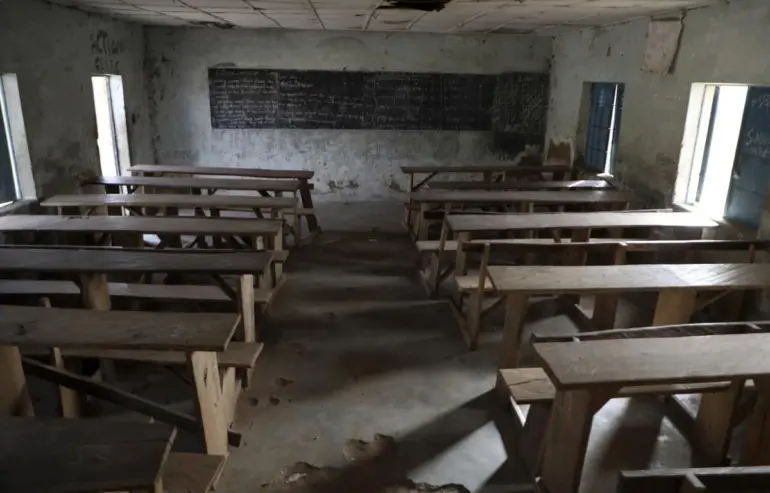
The Federal Government has announced the reopening of 47 Federal Unity Colleges earlier closed due to security concerns across parts of the country.
The announcement was contained in a statement issued on Thursday by the Federal Ministry of Education, which said the decision followed the strengthening of security measures within and around the affected schools.
According to the ministry, academic activities have fully resumed, with students returning safely to their campuses.
“After the strengthening of security architecture within and around the affected schools, academic activities have fully resumed. Students have returned safely to their campuses, with many currently concluding their December academic programmes, while others have successfully completed their examinations,” the statement, signed by the ministry’s Director of Press and Public Relations, Boriowo Folasade, read in part.
The ministry assured parents, guardians, and the general public that the safety, welfare, and well-being of students remain a top priority. It added that the Federal Government continues to work closely with relevant security agencies to sustain stability and restore normalcy within school environments nationwide.
“The Federal Government remains resolute in its responsibility to protect every Nigerian child and to uphold their fundamental right to education in a safe and secure environment.
“This administration places strong emphasis on human capital development and recognises education as a critical pillar for national growth and development. Accordingly, it remains determined to prevent any disruption to the academic calendar,” the statement said.
The ministry noted that the safe return of students and the successful conduct of examinations in several unity colleges underscore the government’s resolve to keep learning on track despite prevailing security challenges.
Mass abductions
The Federal Government had on November 21 ordered the immediate closure of 41 Federal Unity Colleges following a spike in security threats.
The directive was conveyed in a circular dated November 21, 2025, issued by the Federal Ministry of Education, instructing principals of the affected schools to enforce the closure without delay. The schools were located across the North-West, North-East, North-Central and parts of the South.
Among the affected schools were FGGC Minjibir, FTC Ganduje, FGGC Zaria, FTC Kafanchan, FGGC Bakori, FTC Dayi, FGC Daura, FGGC Tambuwal, FSC Sokoto, FTC Wurno, FGC Gusau, FGC Anka, FGGC Gwandu, FGC Birnin Yauri, FTC Zuru, FGGC Kazaure and FGC Kiyawa.
Others included FTC Hadejia, FGGC Bida, FGC New-Bussa, FTC Kuta-Shiroro, FGA Suleja, FGC Ilorin, FGGC Omu-Aran, FTC Gwanara, FGC Ugwolawo, FGGC Kabba, FTC Ogugu, FGGC Bwari and FGC Rubochi.

Also affected were FGGC Abaji, FGGC Potiskum, FGC Buni Yadi, FTC Gashua, FTC Michika, FGC Ganye, FGC Azare, FTC Misau, FGGC Bajoga, FGC Billiri and FTC Zambuk.
Several state governments, including Yobe, Plateau and Bauchi, also ordered the closure of schools within their jurisdictions.
The shutdown followed a resurgence of security threats marked by mass abductions of students across the country. In Niger State, gunmen attacked St. Mary’s Primary and Secondary School in Papiri, abducting more than 300 pupils and teachers. In Kebbi State, over 20 schoolgirls were kidnapped during an attack on a school in Maga town.
The renewed abductions were the latest in a series of attacks on educational institutions dating back to 2014, when students were abducted from Chibok in Borno State.
In response, President Bola Tinubu directed the Minister of State for Defence, Bello Matawalle, to relocate to Kebbi State to coordinate rescue operations. The President also postponed his planned trips to Johannesburg and Angola as insecurity in parts of the country intensified, prompting renewed calls for coordinated national action.