
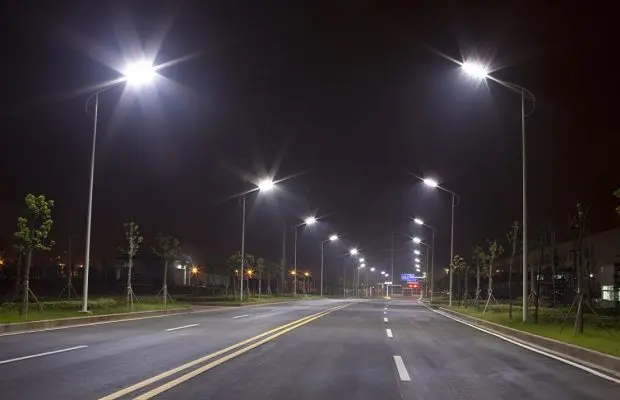
The Lagos State Government has commenced the installation of more than 22,000 solar-powered streetlights across the state as part of its Light Up Lagos Solar Streetlight Initiative.
The project is being implemented by the Lagos State Electrification Agency (LSEA) under the supervision of the Ministry of Energy and Mineral Resources, according to a statement signed by LSEA’s Deputy Director of Public Affairs, Ololade Agboola, on Sunday.
The initiative aims to improve night-time visibility, enhance public safety, and promote energy sustainability. It marks a shift from decades of reliance on grid electricity and diesel-powered generators for public lighting, a system described as costly, unreliable, and environmentally harmful.
LSEA General Manager Kamaldeen Balogun said the solar streetlight rollout aligns with Lagos State’s broader environmental and energy-efficiency goals.
“This project reflects Governor Babajide Sanwo-Olu’s commitment to building a cleaner, greener, and safer Lagos,” Balogun said. “By reducing dependence on fossil fuels and maximising solar energy, we are lighting up the city while preserving the environment for future generations.”
The Ministry of Energy and Mineral Resources, led by Commissioner Biodun Ogunleye, is providing policy oversight to ensure the project aligns with the state’s long-term renewable energy plans.
“The success of the Light Up Lagos project reflects our collective commitment to sustainability,” Ogunleye said. “This is not just about lighting roads; it is about powering progress, enhancing safety, and promoting a cleaner environment for Lagos residents.”
Several major corridors have already been fully illuminated, including Governor’s Road at Alausa Secretariat, Mobolaji Johnson Way, Herbert Macaulay Way, Bode Thomas Road, Muritala Muhammed Way, Jibowu, Market Street Oyingbo, Iddo, Eko Bridge, Marina Bridge, Governor’s Road in Ikotun, and the Lekki–Ikoyi Link Bridge.
Installations are ongoing along Ikorodu Road (Anthony to Fadeyi), Mobolaji Bank Anthony Way, Ikeja Bridge, Western Avenue, the Gbagada–Oshodi Expressway, Alapere/Ogudu, Agric–Ikorodu, and additional sections of Ikorodu Road, with future plans for the Lekki–Epe Expressway.
Balogun explained that the rollout is being executed in phases to ensure coverage across all communities.
“Every light installed represents progress and safety for our people. We are working systematically to ensure that no community is left in darkness,” he said.
The agency noted that all installations are being handled exclusively by LSEA staff to ensure quality control and ease of maintenance.
In November, Governor Sanwo-Olu stated that within a year, the majority of streetlights in Lagos would be solar-powered, with 22,000 already committed. He emphasized that the solar lights are designed to operate for two to three days even without sunlight, demonstrating the government’s commitment to sustainable energy solutions.
