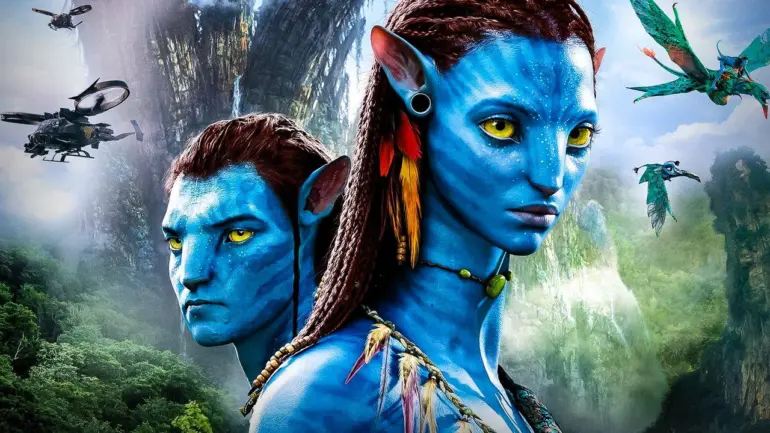
The third installment of the Avatar franchise arrives in cinemas this month, aiming to extend the phenomenal success of one of the highest-grossing film series in history with another visually spectacular, environmentally driven adventure.
Avatar: Fire and Ash, directed by James Cameron, debuts in major markets from December 17, marking the latest chapter 16 years after the filmmaker first introduced audiences to the blue-skinned Na’vi of Pandora.
The franchise remains a global box-office powerhouse. The original Avatar earned a record-breaking $2.9 billion worldwide, while 2022’s sequel, The Way of Water, generated around $2.3 billion despite the pandemic-era slump in cinema attendance, according to The Hollywood Reporter.
Here’s what to know about the new film, which premiered this week in Hollywood and Paris:
A story of family, loss, and displacement
The film reunites audiences with Jake Sully (Sam Worthington), now a revered Toruk Makto and Neytiri (Zoe Saldaña), who are grieving the loss of their eldest son, Neteyam.
The couple’s blended family includes their three children, Kiri (played by Sigourney Weaver), and Spider (Jack Champion), a human boy accepted by everyone except Neytiri.
“We’re seeing mixed-race children coming of age, mom is pure Na’vi, a traditionalist; dad is from another star system,” Cameron said at a Paris press conference. “We’re dealing with a refugee family… people can relate to that.”
A fierce new enemy
The story introduces a previously unseen Na’vi clan: the Mangkwan, or Ash People, survivors of a volcanic disaster who now resort to raiding to stay alive.
Their leader, Varang played by Oona Chaplin, granddaughter of Charlie Chaplin reveals a darker, more complex side of the Na’vi, who have largely been depicted as noble and harmonious in contrast to resource-driven humans.
An ecological warning
The conflict escalates as the RDA, the human corporation known from the first films launches a fresh campaign to hunt the Tulkuns, massive sentient sea creatures, in order to harvest a valuable brain extract called amrita.
Cameron said the original 1995 story was “very environmental in its messaging,” a theme that continues here.
Sigourney Weaver noted that the film reflects real-world urgency: “The ocean is suffering, and we won’t be able to live without the ocean.”
AI-free filmmaking
Though production on Avatar 2 and 3 took place from 2017 to 2018, before the boom in generative AI—Cameron said he remains committed to his pioneering performance-capture method.

“I’m not negative about generative AI,” he told ComicBook.com. “We just don’t use it on the Avatar films. We don’t replace actors.”
Two more sequels are already in development for release later this decade.
Early reactions
Full reviews are still under embargo, but early reactions on social media have been largely positive. Critics praised Cameron for delivering another emotionally charged spectacle, though some noted familiar plot beats from the previous films.
Cameron took the criticism lightly: “I’ve only ever had about five good ideas in my life—I just keep repackaging them,” he quipped.
AFP