
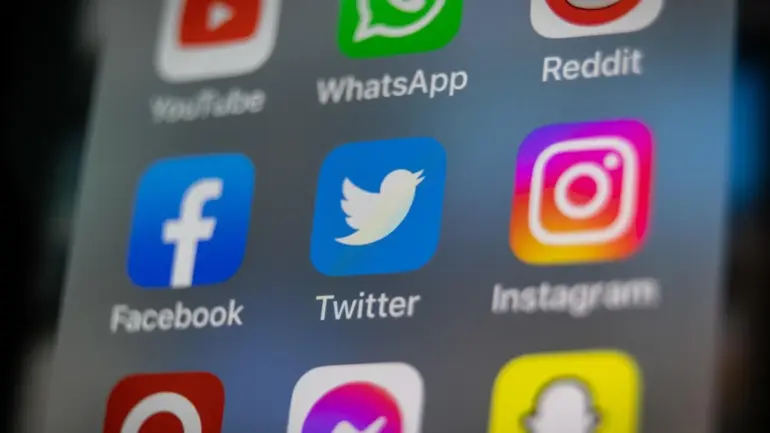
Australia’s upcoming under-16 social media ban is set to make the nation a real-world laboratory for understanding the technology’s impact on young people, experts say.
Supporters of the world-first ban, which takes effect on December 10, point to a growing body of research suggesting that excessive online time can harm adolescent wellbeing. Critics, however, argue there is insufficient hard evidence to justify the legislation and warn it could do more harm than good.
Adolescent brains continue developing into the early 20s, explained psychologist Amy Orben, who leads a digital mental health programme at the University of Cambridge.
“A huge amount” of observational research often based on surveys has found correlations between teen tech use and poorer mental health, she told AFP. But drawing firm conclusions is difficult, she said, because phones are deeply embedded in daily life, and teens may use social media to cope with preexisting difficulties.
“With technology changing so fast, the evidence base will always be uncertain,” Orben said. “Experimental studies or natural experiments could really move the needle. Evaluating Australia’s ban gives us a unique opportunity to see what might happen.”
No “smoking gun”
To examine the effects of the ban, Australian researchers are recruiting 13- to 16-year-olds for the “Connected Minds Study,” designed to assess how the policy influences adolescent wellbeing.
A World Health Organization survey last year found that 11 percent of adolescents struggled to control their social media use. Other studies link excessive social media use to poor sleep, body image issues, lower school performance, and emotional distress. For example, a 2019 JAMA Psychiatry study of U.S. schoolchildren found that spending over three hours a day on social media could raise the risk of mental health problems.
Some experts argue that the risks are clear enough to warrant immediate action.
“I actually don’t think this is a science issue. This is a values issue,” said Christian Heim, an Australian psychiatrist and clinical director of mental health. “We’re talking about cyberbullying, suicide risk, and exposure to harmful content on anorexia and self-harm. Evidence of a risk is growing. We can’t wait for stronger evidence.”
Scott Griffiths of the Melbourne School of Psychological Sciences agreed that a definitive “smoking gun” study is unlikely to emerge soon, but he still supports the ban.
“I’m hopeful that the major social media companies, seeing full-throated legislative action, will finally be motivated to more meaningfully protect the health and wellbeing of young people,” Griffiths said.
“Too blunt”
Before the legislation passed, a poll found that more than three-quarters of Australian adults supported the ban. However, over 140 academics, campaigners, and experts warned in an open letter that the ban could be “too blunt an instrument.”
“People were saying: ‘Kids are anxious, there must be a reason—let’s ban social media,’” said Axel Bruns, a digital media professor at Queensland University of Technology. He argued that children face multiple stressors, from pandemic-disrupted schooling to global crises in Gaza and Ukraine.
Critics also caution that banning social media could push some teens toward more extreme sites while preventing marginalized young people from finding community. Activist Noelle Martin, who focuses on image-based online abuse and deepfakes, said Australia’s history of weak enforcement makes the ban unlikely to have a meaningful impact.
Nonetheless, political support is firm.
“Social media is doing social harm to our children,” Prime Minister Anthony Albanese said earlier this year. “There is no doubt that Australian kids are being negatively impacted by online platforms, so I’m calling time on it.”
AFP
