

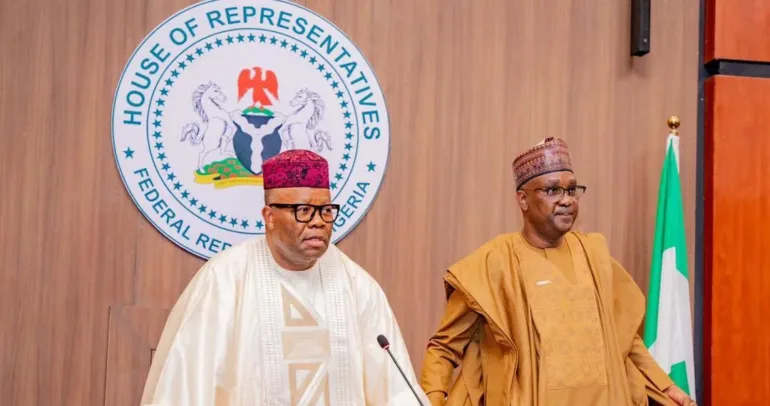
The National Assembly has advanced the ongoing constitutional review process with the transmission of the Constitution of the Federal Republic of Nigeria, 1999 (Sixth Alteration) Bill, 2026, to the 36 State Houses of Assembly for consideration and concurrence.
The Clerk to the National Assembly, Kamoru Ogunlana, transmitted the bill on Wednesday, September 16, 2026, pursuant to directives from the leadership of the National Assembly and in accordance with Section 9 of the 1999 Constitution, as amended.
Under Section 9, a constitutional amendment passed by the National Assembly must secure the approval, by resolution, of at least two-thirds of the State Houses of Assembly — representing 24 of the 36 states — before it can proceed to the President for assent.
Although the Constitution does not prescribe a deadline for the State Houses of Assembly to communicate their decisions, the National Assembly leadership has set a 30-day administrative timeframe to facilitate an orderly and timely conclusion of the process.
In a statement confirming the transmission, Ogunlana said the National Assembly recognised the constitutional role and independence of the State Houses of Assembly in considering the proposed amendments.
“The National Assembly recognises the constitutional responsibility vested in the State Houses of Assembly and respects their independence in the consideration of the Bill. The transmission is intended to facilitate the orderly discharge of their constitutional role in the process,” the statement said.
The Clerk added that the National Assembly remained committed to conducting the constitutional alteration process in strict compliance with the Constitution and the principles of due process, institutional cooperation and respect for the legislative responsibilities of all tiers of government.
According to the statement, once the resolutions of the State Houses of Assembly are received, the National Assembly will take the necessary steps in accordance with the constitutional provisions.
The transmission comes amid a broader push by both chambers of the National Assembly to amend various provisions of the 1999 Constitution.
One of the major proposals in the current alteration exercise is the Constitution Alteration (State Police) Bill, 2026, which seeks to establish a framework for decentralised policing in Nigeria.
The state police proposal has attracted significant attention following support from the Federal Government and the establishment of a working group to develop a framework for a dual policing structure.

Femi Gbajabiamila, Chief of Staff to President Bola Tinubu and Chairman of the Presidential Working Group on the National Policing Bill, said the proposed reform was intended to bring policing closer to communities while establishing safeguards to improve its effectiveness and protect citizens’ rights.
Gbajabiamila said the central issue was no longer simply whether policing should be brought closer to the people, but how to achieve that objective without creating new weaknesses within the system.
He said the proposed reform would give state governments greater responsibility for addressing the security needs of their residents while ensuring that closer policing did not come at the expense of justice and citizens’ rights.