
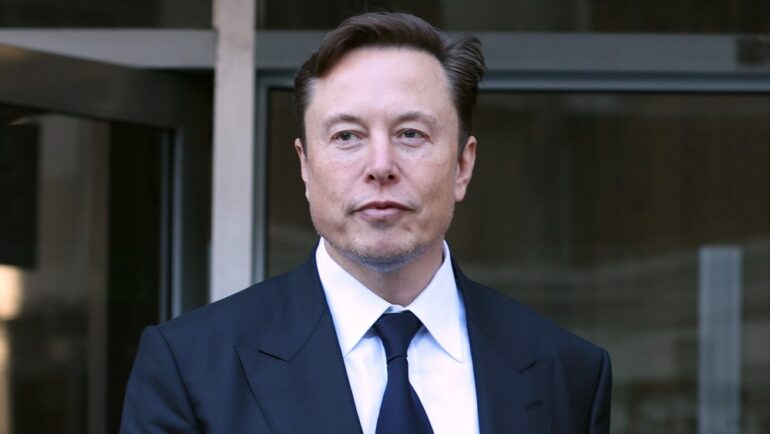
Elon Musk took the stand on Tuesday in a high-stakes trial over the future of OpenAI, accusing its co-founder and CEO Sam Altman and president Greg Brockman of betraying both him and the organisation’s founding mission.
Musk told the court that OpenAI had strayed from its original goal of developing artificial intelligence for the benefit of humanity, alleging it had been transformed from a nonprofit initiative into a profit-driven enterprise.
“If we make it acceptable to loot a charity, the entire foundation of charitable giving in America will be destroyed,” Musk said during his testimony. He described OpenAI as his original vision, claiming he played a central role in its creation, from naming the organisation to recruiting key personnel and providing early funding.
“I could have started it as a for-profit, but I chose not to,” he added, stressing that the organisation was intended to operate without benefiting individuals.
However, lawyers representing OpenAI and Altman challenged that narrative. During opening statements, attorney William Savitt argued that Musk himself had pushed for a for-profit structure during the company’s early growth and sought to position himself as its leader.
According to Savitt, Musk only turned against OpenAI after failing to gain control, later launching his own AI venture, xAI, in 2023. “We are here because Mr. Musk didn’t get his way,” he told the court.
Musk is suing OpenAI, Altman, and Brockman, seeking $150 billion in damages and calling for the organisation to revert to its nonprofit status. He also wants Altman and Brockman removed from leadership roles.
The defence, however, maintains that OpenAI’s shift to a for-profit model in 2019 was necessary to attract investment, scale computing infrastructure, and compete with rivals such as Google’s DeepMind. The company has since secured major backing, including a multibillion-dollar investment from Microsoft.
The trial is also drawing attention to Musk’s conduct outside the courtroom. U.S. District Judge Yvonne Gonzalez Rogers cautioned him over his use of social media after he posted criticisms of Altman online, urging restraint to avoid influencing proceedings. Musk agreed to limit such activity, with Altman making a similar commitment.

The case offers a rare glimpse into the internal dynamics and competing visions that shaped OpenAI’s evolution, from a nonprofit research group to one of the most valuable AI companies in the world. It also raises broader questions about governance, ethics, and the commercialisation of artificial intelligence.
Musk, who has long warned about the risks of AI, told the court his concerns intensified over time, particularly as major tech players accelerated development. He argued that OpenAI was originally intended to serve as a counterbalance to dominant industry forces.
The trial continues Wednesday, with further testimony expected from key figures, including Altman and Microsoft CEO Satya Nadella, as the court examines the future direction of one of the world’s most influential AI organisations.