

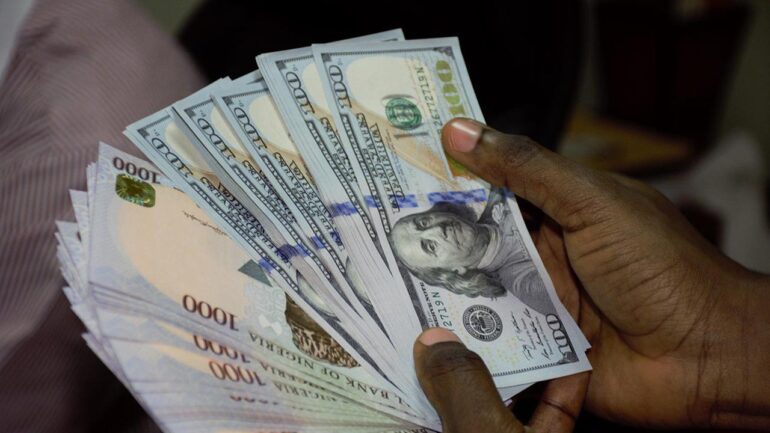
The Nigerian naira traded at ₦1,379.50 per dollar on Thursday, edging slightly from an opening low of ₦1,378.98, according to data from the Nigerian Foreign Exchange Market (NFEM).
Trading activity was moderate in early dealings, with the currency briefly weakening to an intraday high of ₦1,380.00 before stabilising around current levels.
Globally, the US dollar remained on uncertain footing following recent losses, as investors assessed the durability of a fragile ceasefire between the United States and Iran.
The truce appeared increasingly tenuous, with Israel continuing its parallel conflict against Iran-aligned Hezbollah forces in Lebanon. Tehran, meanwhile, accused both Israel and the US of breaching the agreement, warning that further peace talks would be “unreasonable.”
Tensions were further heightened by continued restrictions in the Strait of Hormuz, where vessels without permits have been unable to transit. Shipping firms signalled reluctance to resume operations, pushing oil prices higher.
US President Donald Trump said American ships, aircraft, and military personnel would remain stationed in and around Iran until full compliance with the ceasefire terms is achieved.
The dollar index, which tracks the greenback against a basket of major currencies including the yen and euro, was largely unchanged at 99.07.
The euro slipped 0.01 percent to $1.1661, while the British pound edged up 0.01 percent to $1.3393.
The Japanese yen gave back some of the previous session’s gains, weakening 0.15 percent to 158.81 per dollar following the ceasefire announcement.
Markets are currently pricing in a 55 percent chance of an interest rate hike at the Bank of Japan’s meeting later this month, according to data from Tokyo Tanshi.
The dollar has remained broadly supported amid the conflict, partly because the United States is a net energy exporter and therefore less vulnerable to rising oil prices than major importers such as Japan and several European economies.

The five-week conflict has significantly disrupted global oil and gas supplies, undermining investor confidence and increasing volatility across markets. Despite the ceasefire, Iran retains considerable leverage over shipping routes through the strategically vital Strait of Hormuz.
Analysts say stronger-than-expected US economic data could trigger a rebound in the dollar in the near term.
Elsewhere, the Australian dollar slipped 0.06 percent to $0.7039, while the New Zealand dollar gained 0.17 percent to $0.5832.
In cryptocurrency markets, Bitcoin fell 0.49 percent to $71,030.07, while Ethereum declined 1.06 percent to $2,186.50.