

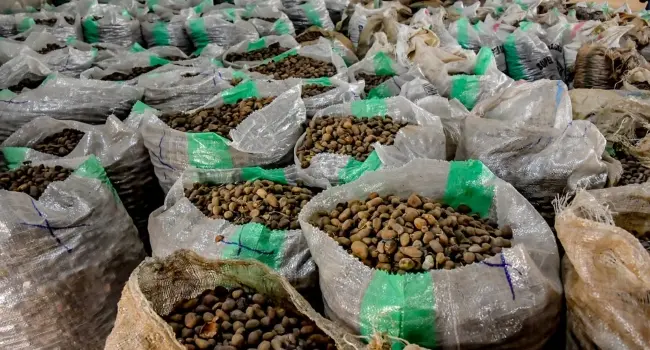
Bola Tinubu has approved a one-year extension of the ban on the export of raw shea nuts, effective from February 26, 2026, to February 25, 2027.
The announcement was made on Wednesday in a statement by the President’s Special Adviser on Information and Strategy, Bayo Onanuga.
According to the statement, the extension underscores the administration’s commitment to industrial development, domestic value addition, and the broader goals of the Renewed Hope Agenda. The ban is intended to boost local processing, improve livelihoods in shea-producing communities, and expand Nigeria’s export earnings through value-added products rather than raw commodities.
To ensure effective implementation, Tinubu directed the Ministers of the Federal Ministry of Industry, Trade and Investment and the Presidential Food Security Coordination Unit (PFSCU) to coordinate a unified national framework aligning industrialisation, trade, and investment priorities along the shea value chain.
The President also approved the adoption of an export framework developed by the Nigerian Commodity Exchange and ordered the withdrawal of all previously granted waivers for direct raw shea nut exports. Surplus raw shea nuts must now be exported strictly through the NCX framework according to approved guidelines.
Additionally, Tinubu instructed the Federal Ministry of Finance to establish a dedicated NESS Support Window to enable the Ministry of Industry, Trade and Investment to pilot a Livelihood Finance Mechanism aimed at strengthening shea production and processing capacity.

The move follows a six-month ban imposed last year to stimulate domestic processing and protect Nigeria’s shea industry. Shea nuts, predominantly harvested from trees in Nigeria’s Savanna belt, are processed into shea butter, a key ingredient in cosmetics, pharmaceuticals, and food products. Processed shea butter can earn 10 to 20 times the value of raw nuts in international markets.
The Federal Government reaffirmed its commitment to policies that promote inclusive growth, local manufacturing, and Nigeria’s competitiveness in global agricultural value chains.