
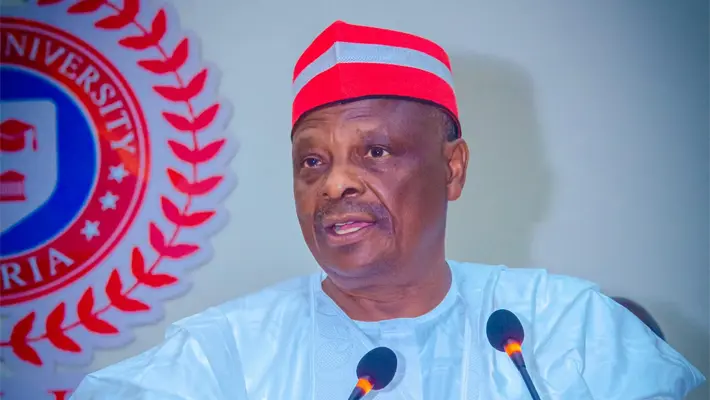
The Kwankwasiyya Movement has rejected the inclusion of its leader, Senator Rabiu Musa Kwankwaso, in the proposed Nigeria Religious Freedom and Accountability Act 2026 (HR 7457), which links him to alleged violations of religious freedom.
In a statement issued on Thursday, the movement described the allegations as “unfounded” and urged US lawmakers to remove any reference to the former Kano State governor from the bill.
“We state unequivocally that these allegations are unfounded, misleading, and inconsistent with the verifiable public record of Senator Kwankwaso’s life and service,” said the statement, signed by the movement’s spokesperson, Habibu Sale Mohammed. It expressed “grave concern” over what it described as selective targeting of the former governor.
Kwankwaso, a former Deputy Speaker of the House of Representatives, two-term Governor of Kano State, Minister of Defence, and Senator, has “never been indicted, prosecuted, or credibly accused of religious persecution, extremism, or human rights violations,” the group said.
The movement stressed that the development of Sharia-based legal systems in parts of northern Nigeria occurred within constitutional provisions and was not the initiative of any single individual.
“These systems remain subject to constitutional oversight and appellate review,” the statement noted. “Singling out Kwankwaso while similar arrangements exist in several states raises serious questions about the basis, consistency, and evidentiary standard behind such a recommendation.”
The group also highlighted Nigeria’s diplomatic relations with the United States and other nations with diverse legal frameworks, arguing that constitutional sovereignty and contextual understanding should guide international engagement.
“The United States maintains diplomatic and strategic relationships with several sovereign nations whose legal systems incorporate Islamic jurisprudence. It would be inconsistent to treat Nigeria’s constitutionally grounded legal pluralism differently without clear and individualized evidence of wrongdoing,” the statement added.
Defending Kwankwaso’s record, the Kwankwasiyya Movement said that during his tenure as governor, he took “decisive measures” to curb extremist threats and protect lives and property across religious divides. It also cited his 2023 presidential ticket with Bishop Isaac Idahosa as evidence of his “enduring belief in religious inclusion and national balance.”
“It is deeply concerning that an opposition political leader with a longstanding national profile would be isolated in a matter of such gravity without transparent and verifiable findings,” Mohammed said.
The movement urged the US Congress to reject the recommendation outright and remove Kwankwaso’s name from the proposed bill, warning that the development may have been influenced by “individuals on a mission to settle personal scores or political rivals.”
“Allegations of this magnitude must be grounded in demonstrable facts, not generalized assumptions,” the statement added, reaffirming Kwankwaso as “a nationalist, a democrat, and a statesman whose public service has been anchored on justice, unity, and inclusive governance.”
The Bill
The legislation, introduced by US lawmakers Chris Smith, Riley Moore, Brian Mast, Mario Diaz-Balart, and Bill Huizenga, seeks to impose sanctions on Kwankwaso, the Miyetti Allah Cattle Breeders Association of Nigeria (MACBAN), and Miyetti Allah Kautal Hore for alleged violations of religious freedom.
According to details posted on the US Congress website, the bill claims that Kwankwaso contributed to systemic religious “persecution of Christians that has persisted” in Nigeria. If passed, the legislation would empower the US Departments of State and Treasury to impose targeted sanctions, including visa bans and asset freezes, on individuals or entities responsible for severe religious freedom violations.