

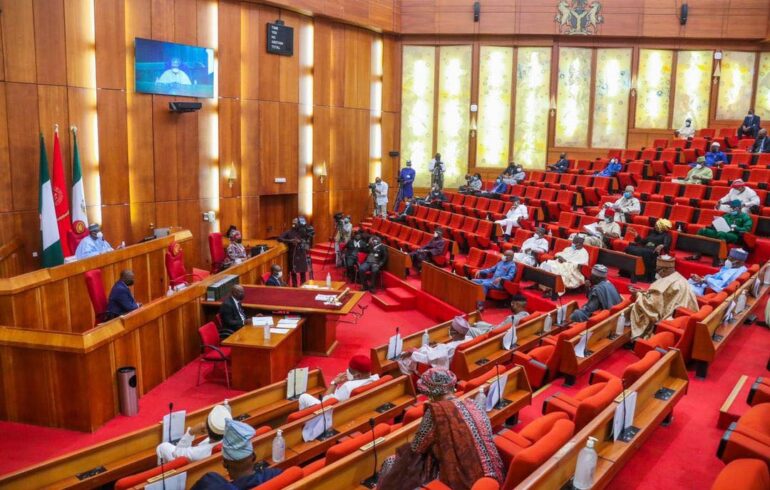
The Senate has scheduled an emergency plenary session for Tuesday, February 10, 2026.
In a notice issued by the Clerk of the Senate, Emmanuel Odo, lawmakers were directed to reconvene at the National Assembly complex on the instruction of Senate President Godswill Akpabio.
“I am directed by His Excellency, the President of the Senate, Distinguished Senator Godswill Obot Akpabio, GCON, to inform all Distinguished Senators of the Federal Republic of Nigeria that an Emergency Sitting of the Senate has been scheduled as follows: Date: Tuesday, 10th February, 2026; Time: 12:00 noon; Venue: Senate Chamber,” the notice stated.
Odo urged all senators to attend the emergency session, apologising for any inconvenience the short notice might cause.
“All inconveniences this will cause to Distinguished Senators are highly regretted, please,” the memo added.
No official reason was given for the emergency sitting. However, the development comes amid intense debate over the electronic transmission of election results following the passage of the Electoral Act Amendment Bill through third reading at the Senate, after which plenary was adjourned.
Clause 60(30) of the amendment bill addresses the electronic transmission of results. On Wednesday, the Senate retained the provision for electronic transmission as contained in the 2022 Electoral Act but rejected proposals for real-time transmission of results and a 10-year ban on vote-buying. Instead, it maintained existing penalties of fines and jail terms for electoral offences.
The decision has drawn criticism from sections of the public. In response, some senators have insisted that the bill enjoyed overwhelming support within the chamber.
Senator Victor Umeh, who represents Anambra Central, said more than 85 per cent of senators supported electronic transmission of election results.
“Over 85 per cent of senators agreed to electronic transmission. It was common ground. Even the ad hoc committee of the Senate agreed to it,” Umeh told Channels Television.

According to him, the only modification approved during the Senate’s executive session was the removal of the phrase “in real time,” due to concerns over network reliability in certain parts of the country.
Umeh explained that confusion arose during plenary when a motion was allegedly moved to replace the word “transmission” with “transfer” without adequate debate.
“It was only ‘real time’ that was expunged because of network issues. Transmission itself was never in dispute,” he said.
“There was no debate on it. If debate had been allowed, it would have taken us back to the executive session where the matter had already been exhaustively discussed and resolved.”