

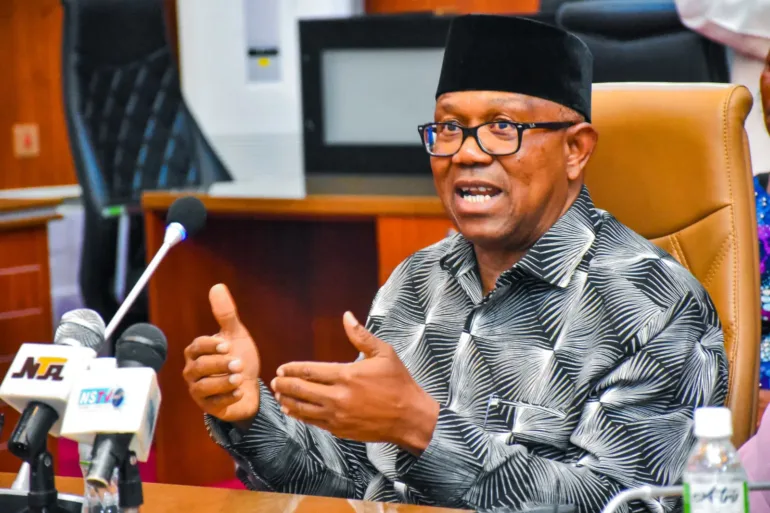
Former presidential candidate Peter Obi has called on the Federal Government to suspend the implementation of Nigeria’s newly gazetted tax laws, citing what he described as serious errors, inconsistencies, and policy gaps that could negatively affect businesses and taxpayers.
In a statement posted on his X (formerly Twitter) account on Tuesday, Obi referenced a report by KPMG Nigeria, which identified potential concerns relating to the taxation of shares, dividend treatment, obligations of non-residents, and foreign exchange deductions.
According to Obi, the report flagged “31 critical problem areas, ranging from drafting errors to glaring policy contradictions and administrative gaps.” He noted that the complexity of the issues was such that “private meetings between the National Revenue Service and KPMG were required for these concerns to be acknowledged.”
“If experts need closed-door discussions to navigate the complexities of our tax laws, what hope does the average Nigerian have of understanding the obligations being imposed on them?” Obi asked.
He argued that taxation is a social contract between the government and citizens and faulted the lack of public consultation before the laws were finalised.
“Typically, months if not years are devoted to consultations with businesses, workers, and civil society before tax proposals are presented for public scrutiny, with their implications clearly explained,” he said.
“Yet in Nigeria, we saw no such consultations on the final tax laws, leaving citizens in the dark about both the regulations and the benefits they are expected to receive in return.”
Obi also criticised what he described as the government’s enforcement-first approach.
“We have rushed tax collection without building consensus and imposed enforcement without adequate explanation,” he said, adding that Nigerians are still waiting for relief following the removal of fuel subsidies.
“Instead, they face soaring food prices, high transport costs, shrinking purchasing power, and rising poverty levels.”
Describing the new tax regime as “riddled with inconsistencies,” Obi said the emergence of “31 red flags from a leading global accounting firm” was “not the hallmark of responsible governance.”
“Without trust, taxation becomes punishment. Without clarity, it breeds confusion. Without visible public value, it amounts to robbery,” he added.
He concluded that Nigeria could not afford to impose additional burdens on an already strained population, calling for a more consultative approach.
“What the country needs is a government that listens, communicates clearly, and prioritises national consensus. This is the only sustainable path to reform, unity, growth, and shared prosperity,” Obi said.
However, the Chairman of the Presidential Fiscal Policy and Tax Reforms Committee, Taiwo Oyedele, had earlier responded to the KPMG report, clarifying the policy intent behind the new tax laws.
Oyedele maintained that most of the issues raised were “misunderstandings of policy objectives or disagreements with deliberate reform choices,” adding that while some of KPMG’s observations were useful, “the bulk of the report mischaracterised the objectives and structure of the new tax framework.”