

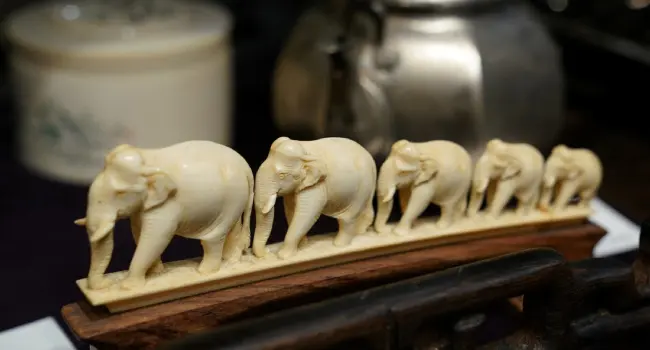
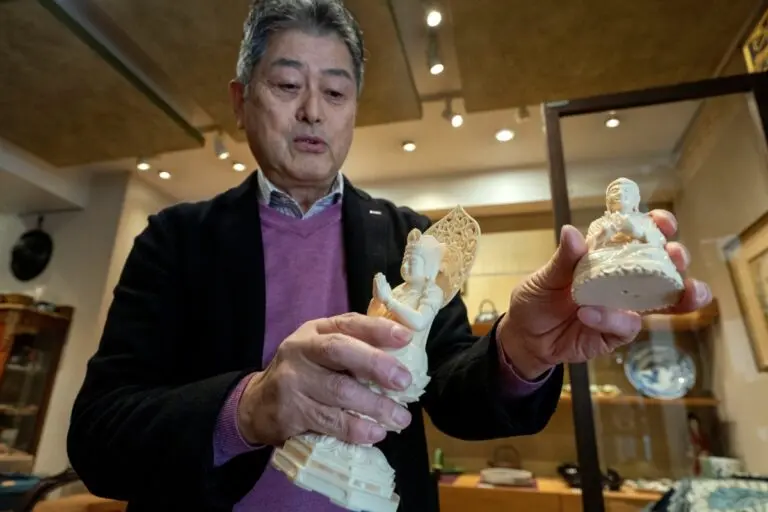
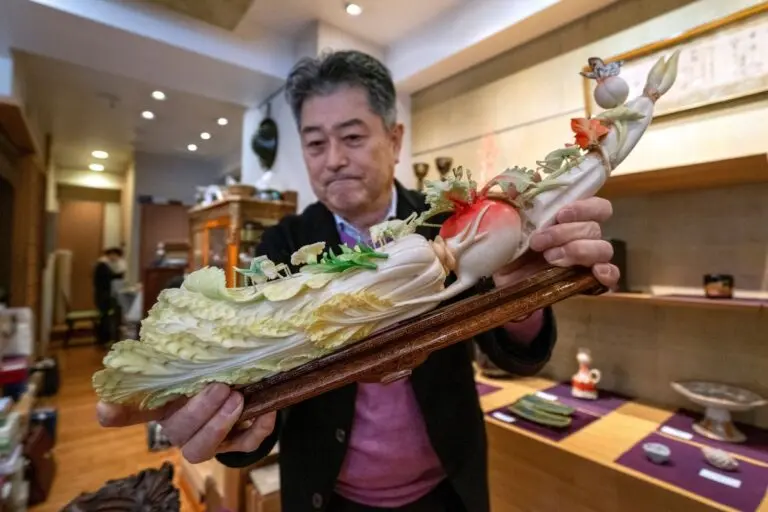
At his store in Tokyo’s upscale Ginza district, Hajime Sasaki displays a diverse array of wares, from chopsticks to Buddha statues, many made of ivory.
International trade in elephant ivory is banned, but Japan maintains one of the world’s largest legal domestic markets for the product, which can only be bought and sold within the country. Stock comes from pre-ban imports more than 30 years ago or occasional government auctions.
Conservationists warn that Japanese ivory often leaks abroad, fueling black-market trade, driving demand, and undermining bans in countries such as China.
Sasaki’s shop features pamphlets in Chinese and English explaining that ivory cannot leave Japan, yet he says he still “receives many Chinese customers.”
“Tourists give up buying ivory when I explain you can’t bring it outside Japan,” the 69-year-old told AFP.
Elephants at risk
Conservationists estimate 10,000 to 15,000 elephants are killed each year for their tusks. Data indicates ivory is leaving Japan’s domestic market: since 2008, more than 3,600 kilograms (four U.S. tons) of ivory linked to Japan have been seized worldwide, including dozens destined for China.
A CITES (Convention on International Trade in Endangered Species of Wild Fauna and Flora) document presented at a recent global wildlife trade meeting in Uzbekistan warned that the data suggests “some weakness in Japan’s law enforcement.”
Organized smuggling
In 2023, a shipment reportedly bound for Thailand carrying 710 pieces was intercepted, raising concerns that organized criminal networks are involved, said Matt Collis, senior policy director at the International Fund for Animal Welfare (IFAW).
At the CITES meeting, four African nations unsuccessfully pushed for a resolution calling for the closure of all remaining domestic ivory markets. Japan denies that its domestic market harms elephant conservation and said it continues to “implement strict control measures” to prevent leakage.
Impact on China
Japan’s alleged ivory leakage complicates efforts by China, once the world’s largest ivory market, which banned domestic trade in 2017.
“China is doing their best to enforce their domestic ivory ban and to change public perceptions,” said Collis. “But you have a neighbouring country that is undermining these efforts by not enforcing controls and perpetuating demand.”
Domestic market and demand
Ivory was historically used in Japan for personal seals and musical instruments. Today, Japan has a 250-tonne stockpile, supplemented by CITES-approved auctions in 1999 and 2008.
At Sasaki’s shop, shelves are lined with intricately carved ornaments, including a Buddha statue worth more than $1,500 (238,000 yen) housed in a gold-painted cabinet. Yet demand is low: he sells only one or two items per month, mostly to older Japanese customers.

“So inventory in Japan is piling up, and demand from China and other countries persists,” said Masayuki Sakamoto, director of the Japan Tiger and Elephant Fund (JTEF).
Although China’s ban has reduced some demand, ivory carvings, jewelry, and trinkets remain highly prized, creating incentives for traffickers. Experts also question Japan’s tracking system, which focuses on whole tusks even though most trade is in small, derivative products.
Japan has resisted curtailing domestic sales. It supported a Namibian CITES proposal for a one-off government auction of African ivory stocks to other governments — a move opposed by conservationists, who warned it would increase demand.
Sasaki and the Tokyo Ivory and Crafts Association advocate “sustainable use” of ivory as a form of conservation.
“Smuggling is bad,” Sasaki said. “But I think reusing elephant tusks would be better than disposing of them, and generate income.”
AFP